Energy Storage Batteries Explained: From Peak Shaving to Off-Grid Power
Power outages, skyrocketing utility bills, and concerns about grid reliability, these worries keep homeowners and business owners up at night. But what if you could take control of your energy future? An energy storage battery offers exactly that: the ability to store electricity when it's plentiful (or cheap) and use it when you need it most. Whether you're pairing it with solar panels, preparing for emergency blackouts, or simply tired of peak-rate charges draining your wallet, battery energy storage systems have evolved into practical, affordable solutions. Since 2010, companies like Humless have pioneered residential and commercial battery systems that deliver real energy independence. This guide breaks down everything you need to know about energy storage batteries in 2026, from how they work to choosing the right technology for your specific needs.
Key Takeaways
- An energy storage battery captures and stores electrical energy in chemical form, allowing you to use cheap or abundant power during peak-rate periods, reducing utility bills by 40–50% on time-of-use rates.
- Modern battery energy storage systems include battery modules, a Battery Management System, a Power Conversion System, and an Energy Management System that work together to optimize charging and discharge cycles.
- LiFePO4 batteries are the gold standard for residential and commercial energy storage, offering 3,000–5,000+ cycles, superior thermal stability, and UL-certified safety compared to traditional lithium-ion or lead-acid alternatives.
- Battery systems provide seamless backup power during grid outages and enable renewable energy integration by capturing surplus solar or wind production for use when generation is low.
- Proper sizing requires analyzing your daily energy consumption and peak power demands; most homes need 25–30 kWh of usable storage to achieve 24-hour whole-home backup without solar recharge.
What we'll cover: Three energy storage applications get conflated: peak shaving, off-grid power, and renewable integration. They overlap, but the design optimizations are different. This article walks through each and shows where Wide Temp's spec sheet matters.
Peak Shaving: The Mechanic
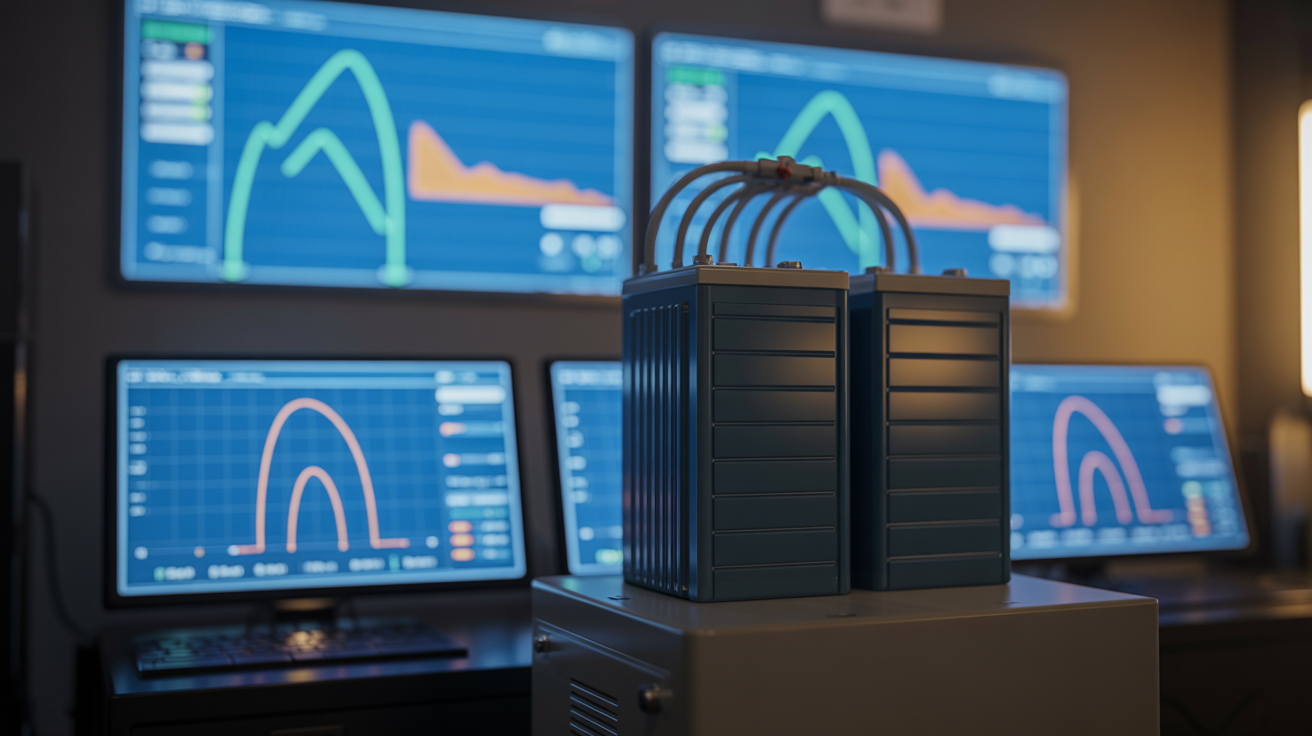
Peak shaving means using stored energy to reduce the highest power draw your meter sees during a billing period. For commercial customers on demand-charge tariffs, this is the dominant savings mechanism. For residential customers on time-of-use rates, peak shaving is what reduces your peak-period energy bill.
The math: if your facility draws 80 kW during the 6–9pm peak and your tariff charges $20/kW for the highest 15-minute interval, that peak costs $1,600/month. A 50 kWh battery discharging at 30 kW during the peak hours brings the metered draw to 50 kW — reducing the demand charge by $600/month, or $7,200/year.
What Is an Energy Storage Battery and How Does It Work?
An energy storage battery is an electrochemical device that captures electrical energy and stores it in chemical form, then releases it on demand as usable electricity. Think of it as a reservoir for power, instead of water, you're banking kilowatt-hours for later use.
The magic happens through a reversible chemical reaction. During charging, electrons flow through an external circuit from the positive to the negative terminal while ions shuttle through an internal electrolyte. This process increases the battery's chemical potential energy. When you discharge the battery, the reaction reverses: stored chemical energy converts back into electrical current that powers your home, business, or critical equipment.
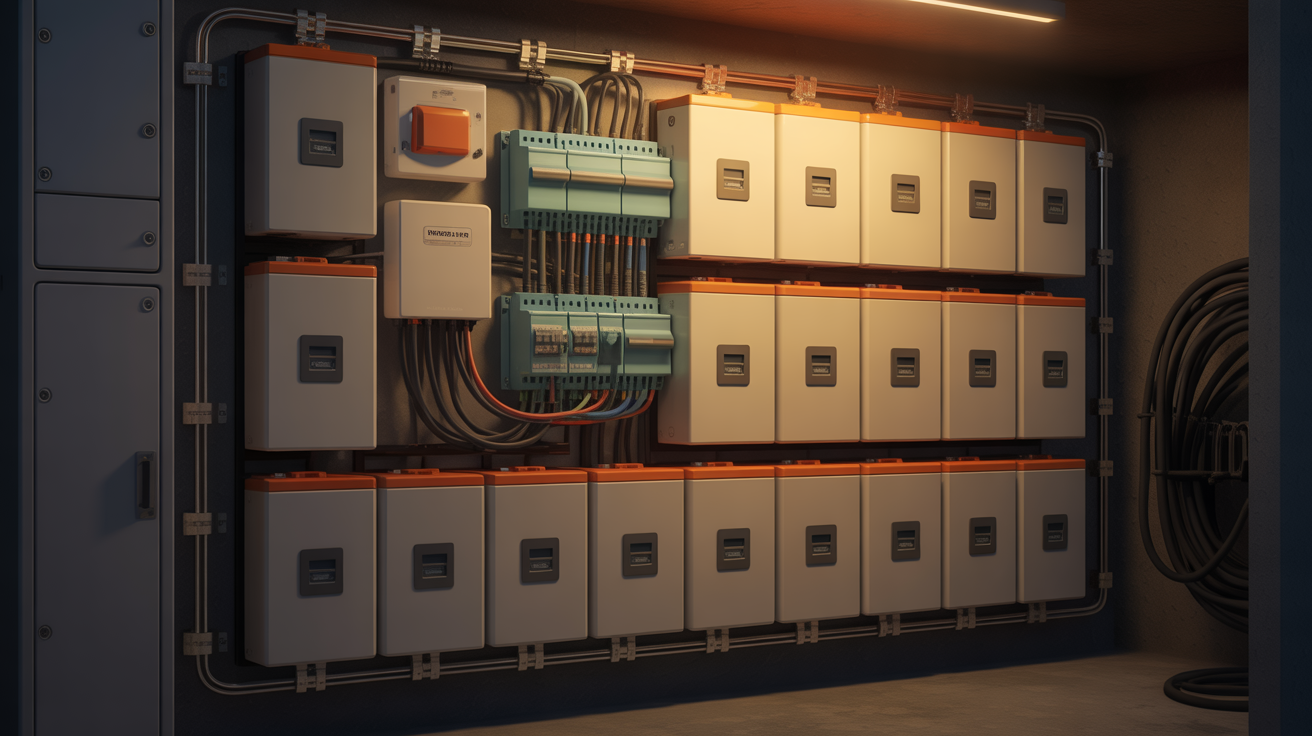
Modern battery energy storage systems aren't just a single battery pack. They're sophisticated setups with several critical components working in harmony:
- Battery modules: Typically lithium-based cells arranged in series and parallel configurations to achieve the desired voltage and capacity
- Battery Management System (BMS): The brain of the operation, constantly monitoring cell health, temperature, voltage, and state of charge to prevent damage and maximize lifespan
- Power Conversion System (PCS) or Inverter: Converts DC electricity stored in batteries to AC power that runs your household appliances and electronics
- Energy Management System (EMS): Uses smart algorithms to decide when to charge (often during off-peak hours or when solar production is high) and when to discharge (during peak demand or outages)
Humless BESS systems integrate all these components with UL-certified safety standards, ensuring reliable performance whether you're grid-tied, off-grid, or somewhere in between. The system seamlessly pulls from solar, wind, generators, or grid power, whichever source makes the most sense at any given moment.
Key Benefits of Battery Energy Storage for Homes and Businesses
Battery energy storage delivers tangible advantages that go far beyond just having backup power during storms. Here's why homeowners, off-grid enthusiasts, and businesses are investing in these systems.
Grid stabilization and renewable integration: If you've installed solar panels, you know the frustration, your system generates the most power midday when you need it least, and produces nothing after sunset when you're cooking dinner and running the AC. Battery storage solves this mismatch. It captures surplus renewable energy during peak production and strategically dispatches it during high-demand periods or when the sun isn't shining and the wind isn't blowing. This balances supply and demand, making renewable energy far more practical and efficient.
Cost optimization: Smart battery systems charge when electricity rates are low (often overnight) and discharge when prices spike. For businesses facing demand charges, fees based on peak usage, this arbitrage can slash monthly bills dramatically. Lithium-ion battery costs have plummeted 80% from 2013 to 2021, making the return on investment more attractive than ever.
Energy Independence and Backup Power
Nothing beats the peace of mind that comes with true energy resilience. When the grid goes down, whether from storms, wildfires, equipment failures, or rolling blackouts, a battery energy storage system keeps your lights on, your refrigerator running, and your internet connected.
For off-grid property owners, batteries are essential infrastructure. They store energy from solar arrays or wind turbines, providing reliable power around the clock without depending on utility companies. Even grid-tied homeowners gain substantial independence: you're less vulnerable to rate hikes, time-of-use pricing games, and utility policy changes.
Humless systems offer seamless automatic switchover during outages, so there's no fumbling with manual transfer switches in the dark. You might not even notice the grid went down until your neighbors start texting about the blackout.
Cost Savings and Peak Shaving
Peak shaving is one of the most compelling financial benefits, especially for commercial facilities. Utilities often charge businesses not just for total energy used, but for their highest demand spike during the billing period. A single afternoon of heavy equipment use can drive up costs for the entire month.
Battery systems tackle this by discharging stored energy during those peak periods, "shaving" off the demand spike. For residential customers on time-of-use (TOU) rates, the logic is similar: draw from your battery during expensive evening hours (5–9 PM when rates might be 40–50 cents per kWh) and recharge overnight when rates drop to 12–15 cents.
The savings compound over time. With 15+ years of proven reliability, like what Humless has delivered since 2010, these systems pay for themselves through reduced utility bills, avoided demand charges, and protection against future rate increases.
Types of Energy Storage Batteries: Choosing the Right Technology
Not all batteries are created equal. The chemistry you choose impacts everything from lifespan and safety to cost and performance. Here's what you need to know about the main players in 2026.
Lithium-ion batteries dominate both residential and grid-scale storage markets. They offer excellent charge retention, high energy density (more storage in less space), and rapid charge/discharge capabilities. Costs have dropped dramatically, making them the go-to for most applications. Within this category, you'll find variations like NMC (nickel manganese cobalt) and the safer, longer-lasting LiFePO4.
Flow batteries (particularly vanadium redox) shine in large-scale commercial and utility applications. They store energy in liquid electrolytes housed in external tanks, making capacity easily scalable, just add bigger tanks. They handle temperature variations well and can last 20+ years with minimal degradation. The downsides? Lower energy density, higher complexity, and steeper maintenance costs make them less practical for most residential users.
Lead-carbon batteries represent an evolution of traditional lead-acid technology. By incorporating carbon's super-capacitive properties, they deliver quick energy bursts, longer cycle life, and better performance than standard lead-acid, all at a lower price point than lithium systems. They're gaining traction for budget-conscious grid-scale projects, though lithium still outperforms them in most metrics.
LiFePO4 vs. Lithium-Ion vs. Lead-Acid
For homeowners and businesses, the choice usually comes down to three options:
LiFePO4 (Lithium Iron Phosphate): The gold standard for residential battery energy storage. LiFePO4 batteries offer superior thermal stability and safety, they're far less prone to thermal runaway than other lithium chemistries. Expect 3,000–5,000+ cycles (often 10–15 years of daily use), excellent performance across temperature ranges, and virtually zero maintenance. Humless specializes in LiFePO4 BESS systems with UL certification, delivering the best balance of safety, longevity, and performance.
Standard Lithium-Ion (NMC, NCA): Slightly higher energy density than LiFePO4, but with trade-offs in safety and lifespan. Common in electric vehicles and some home systems, but the safety profile makes LiFePO4 the better choice for stationary storage where you don't need maximum energy density.
Lead-Acid: The old guard. They're cheap upfront but require regular maintenance, have shorter lifespans (500–1,200 cycles), lower depth of discharge (you can only use 50% of capacity without damaging the battery), and contain toxic materials. For critical backup power or daily cycling with solar, lead-acid just can't compete with modern lithium solutions in 2026.
Off-Grid Power: A Different Optimization
Off-grid systems aren't trying to shave a peak; they're trying to deliver 100% of the home's energy needs without grid backup. The optimization variables are autonomy days (how long the system runs without sun), battery sizing, and generator backup integration.
A typical off-grid sizing target is 3 days of autonomy at 80% DoD on the battery. For a 30 kWh/day household, that's 30 × 3 / 0.8 = 112 kWh of installed battery capacity. Pair with 12+ kW of solar PV (oversized to recover the bank in a single sunny day), and a propane generator for the 5%-of-the-year edge cases.
Wide Temp's role in off-grid: cells that work in unconditioned battery rooms in Alaska, Maine, Montana, and similar climates where heated battery rooms are uncommon and expensive.
Renewable Integration: The Newest of the Three
Renewable integration is the application driving most of the 2024–2026 growth in residential storage. Net-metering 3.0 (California) and similar tariffs across the country have flattened the export rate, making self-consumption (storing solar for evening use) the better economics. The optimization is round-trip efficiency, charge acceptance during peak solar, and discharge-on-demand precision.
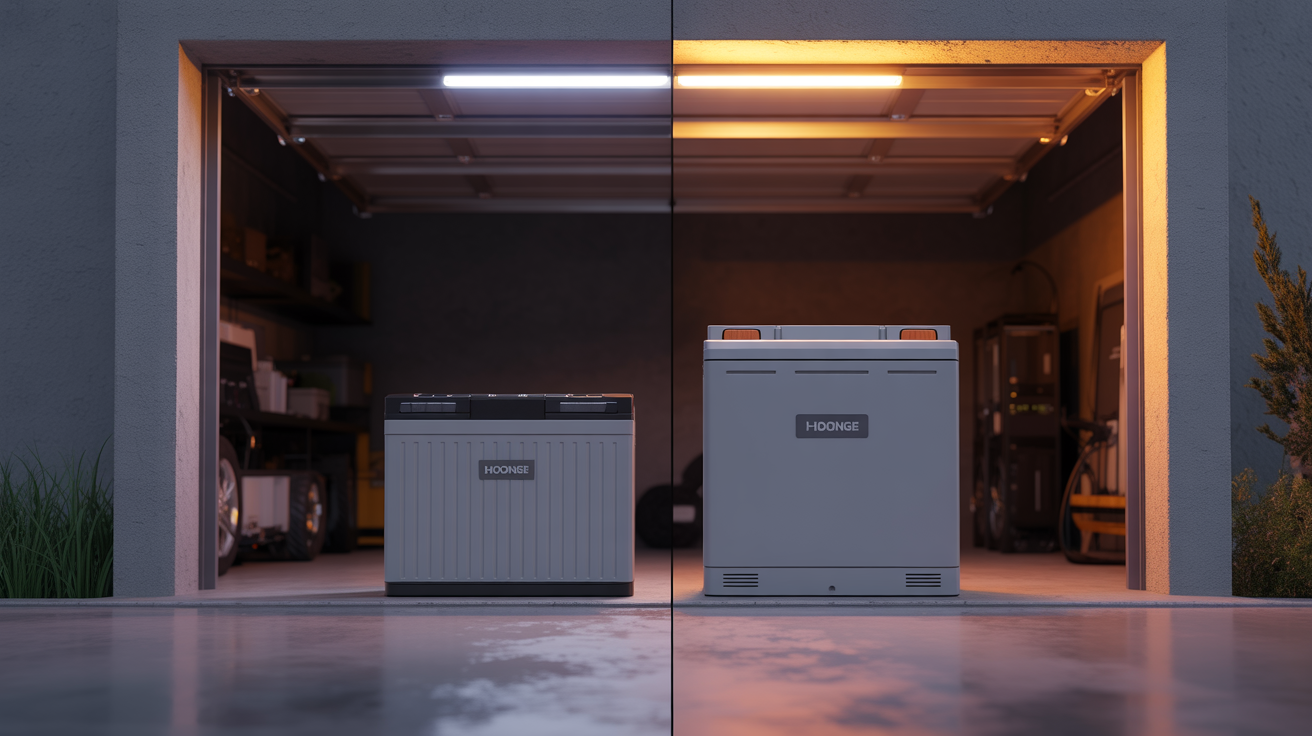
Wide Temp's flat charge acceptance from −40°F to 140°F is the key spec for this application. A standard battery that derates to 50% charge acceptance in a 110°F garage on a hot summer afternoon is wasting solar production exactly when there's the most of it.
Where Each Application Picks a Different Spec
| Application | Key Spec |
|---|---|
| Peak shaving (commercial) | High continuous power output, fast response |
| Off-grid (residential) | Cycle life, autonomy capacity, low-temperature operation |
| Renewable integration | Round-trip efficiency, flat charge acceptance vs. temp |
How to Size and Install a Battery Energy Storage System
Getting the sizing right is crucial, too small and you won't meet your needs during outages or peak periods: too large and you've wasted money on unused capacity.
Start by understanding two key specs: rated power and duration. Rated power (measured in kilowatts or megawatts) indicates the maximum discharge rate, how much electricity the system can deliver at once. Duration tells you how long it can sustain that output. For example, a 10 kW system with 20 kWh capacity can deliver full power for two hours, or 5 kW for four hours.
For residential sizing, analyze your consumption patterns. Pull up several months of utility bills to identify:
- Average daily energy use (kWh per day)
- Peak power demand (the highest instantaneous draw, usually when AC, electric stove, and other appliances run simultaneously)
- Critical loads you want backed up during outages (refrigerator, lights, internet, medical equipment vs. entire home)
Most homes use 20–40 kWh daily. If you want whole-home backup for 24 hours without solar, you'll need at least 25–30 kWh of usable storage plus enough power output (8–10 kW) to handle simultaneous loads. Pairing with solar? You can often get away with smaller battery capacity since panels recharge the system during the day.
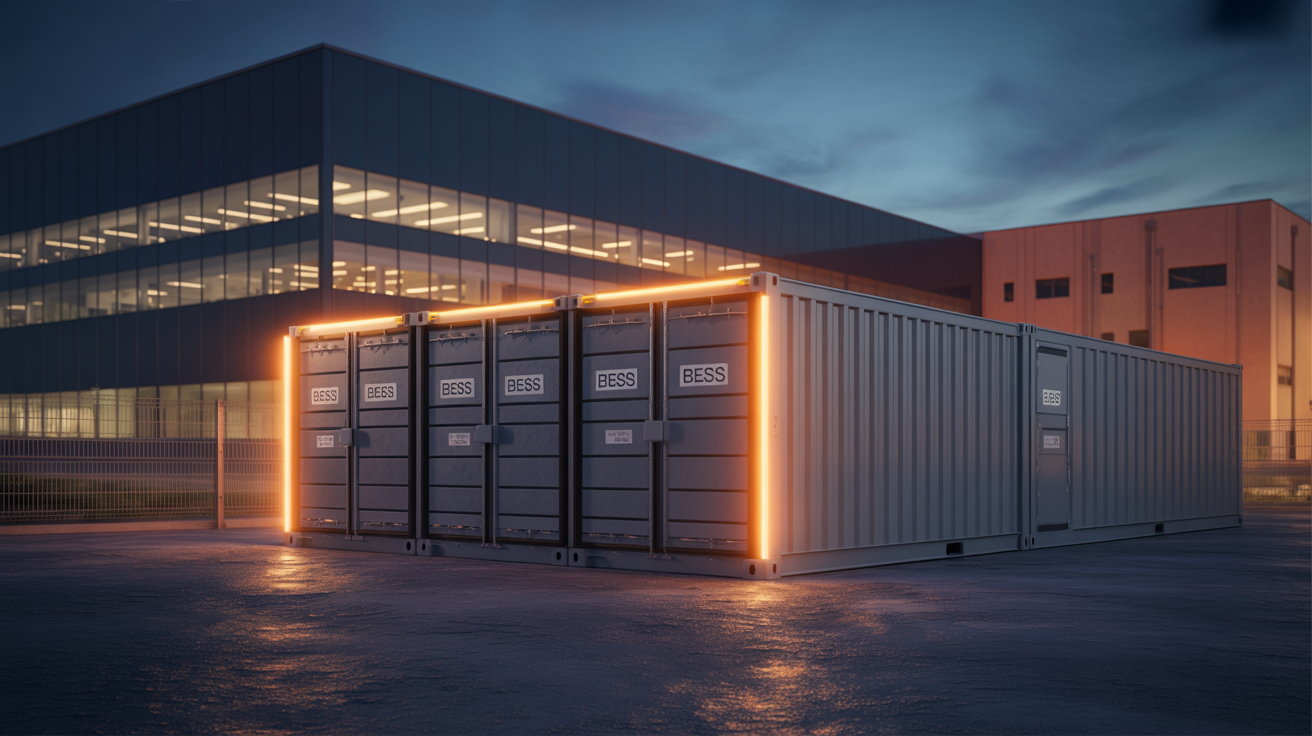
Commercial and off-grid installations require more sophisticated analysis. Professional energy audits examine demand profiles, identify expensive peak periods, calculate solar production curves, and model different scenarios. Humless offers 24/7 support and consultation to help size systems correctly, whether you're powering a remote cabin or a manufacturing facility.
Installation best practices: Work with certified installers familiar with battery energy storage systems. Proper installation includes:
- Climate-controlled or temperature-stable location (batteries perform best between 50–85°F)
- Adequate ventilation, even for sealed LiFePO4 systems
- Proper electrical connections with appropriate breakers and disconnect switches
- Integration with existing solar inverters, generators, or grid connections
- Configuration of the energy management system to match your rate schedule and backup priorities
Humless BESS systems are designed for straightforward integration with solar, grid, wind, and generator sources, meaning your installer can configure the optimal setup for your specific situation. And with UL certification and 15+ years of proven field performance, you're investing in a system built to last and protect what matters most.
Frequently Asked Questions About Energy Storage Batteries
What is an energy storage battery and how does it work?
An energy storage battery is an electrochemical device that stores electrical energy in chemical form and releases it on demand. During charging, electrons flow through an external circuit while ions shuttle through the electrolyte, building chemical potential. During discharge, this process reverses, converting stored energy back into usable electricity for your home or business.
How much can I save with peak shaving using a battery energy storage system?
Peak shaving discharges stored energy during high-rate periods (like 5–9 PM when rates might be 40–50 cents per kWh) instead of drawing from the grid. Residential customers can recharge overnight at lower rates (12–15 cents). The savings compound significantly over 15+ years as systems pay for themselves through reduced utility bills and avoided demand charges.
What's the difference between LiFePO4 and standard lithium-ion batteries?
LiFePO4 offers superior thermal stability, lower risk of thermal runaway, and longer lifespan (3,000–5,000+ cycles). Standard lithium-ion has slightly higher energy density but weaker safety profiles. For stationary home and business storage, LiFePO4 is the preferred choice due to its safety and 10–15 years of daily-use reliability.
How do I size an energy storage battery system for my home?
Analyze your utility bills to determine average daily energy use, peak power demand, and critical loads you want backed up. Most homes use 20–40 kWh daily. For 24-hour whole-home backup without solar, you'll typically need 25–30 kWh of usable storage plus 8–10 kW of power output. Pairing with solar allows smaller battery capacity.
Can a battery energy storage system work with solar panels?
Yes, battery systems solve solar's key limitation: midday overproduction when you need power least. Batteries capture surplus solar energy during peak production and strategically discharge it during evening peak demand or nighttime. This integration maximizes renewable efficiency and provides 24/7 energy independence without grid reliance.
Why have lithium-ion battery costs dropped so dramatically?
Lithium-ion battery costs declined 80% from 2013 to 2021 due to improved manufacturing scale, technological advances, and increased competition. This cost reduction has made energy storage battery systems significantly more affordable for residential and commercial applications, improving return on investment timelines considerably.
Reviewed By
Application-specific optimization criteria authored and reviewed by Wide Temp engineering, with sizing methodology validated against off-grid installs in Alaska and Montana from our service network. Final review: Darrell Jakins, CEO.
If you're trying to size a system for one of these applications, tell us which one and a few load numbers. We'll spec it.
Reviewed by Intelligent Power Engineering Team
This article was written and fact-checked by our in-house battery engineering team with 50+ years of combined experience in LiFePO4 technology and wide temperature battery systems.
Meet our team →