Standalone Home Battery Backup Without Solar: A 2026 Implementation Guide
Power outages don't wait for convenient moments. Whether it's a summer storm knocking out your grid or a winter freeze shutting down infrastructure, the ability to keep your lights on, and your fridge running, can make all the difference. You've probably heard a lot about solar-plus-battery setups, but here's something many homeowners don't realize: you can install a battery backup system without solar panels at all. These standalone systems are gaining traction in 2026, offering a flexible, future-ready path to energy independence without requiring a full rooftop overhaul or dealing with shading issues.
Key Takeaways
- Home battery backup without solar provides reliable emergency power and cost savings through time-of-use optimization, storing grid electricity to use during expensive peak hours without requiring rooftop panels.
- LiFePO4 battery chemistry is the gold standard for residential backup systems, offering superior safety, longevity of 10,000+ charge cycles, and the stability needed for whole-home energy independence.
- Grid-charged battery systems automatically switch to backup power in under 30 milliseconds during outages, keeping essential devices like medical equipment, refrigerators, and communication systems running safely and silently.
- Time-of-use rate optimization can save homeowners $70–$840 annually by charging batteries during off-peak hours and discharging during expensive peak periods, making standalone battery backup financially attractive in high-rate markets.
- A home battery backup system offers flexibility for renters, homes with shaded roofs, or HOA restrictions, with the option to add solar panels later as circumstances change.
Why this matters: Standalone (grid-charged) battery backup is one of the fastest-growing residential storage segments, and it's also the segment where temperature performance matters most — the battery often lives in an unconditioned garage with no solar production buffer to cover degraded capacity. This guide is built for the install that doesn't include rooftop solar.
What "Backup Without Solar" Actually Looks Like
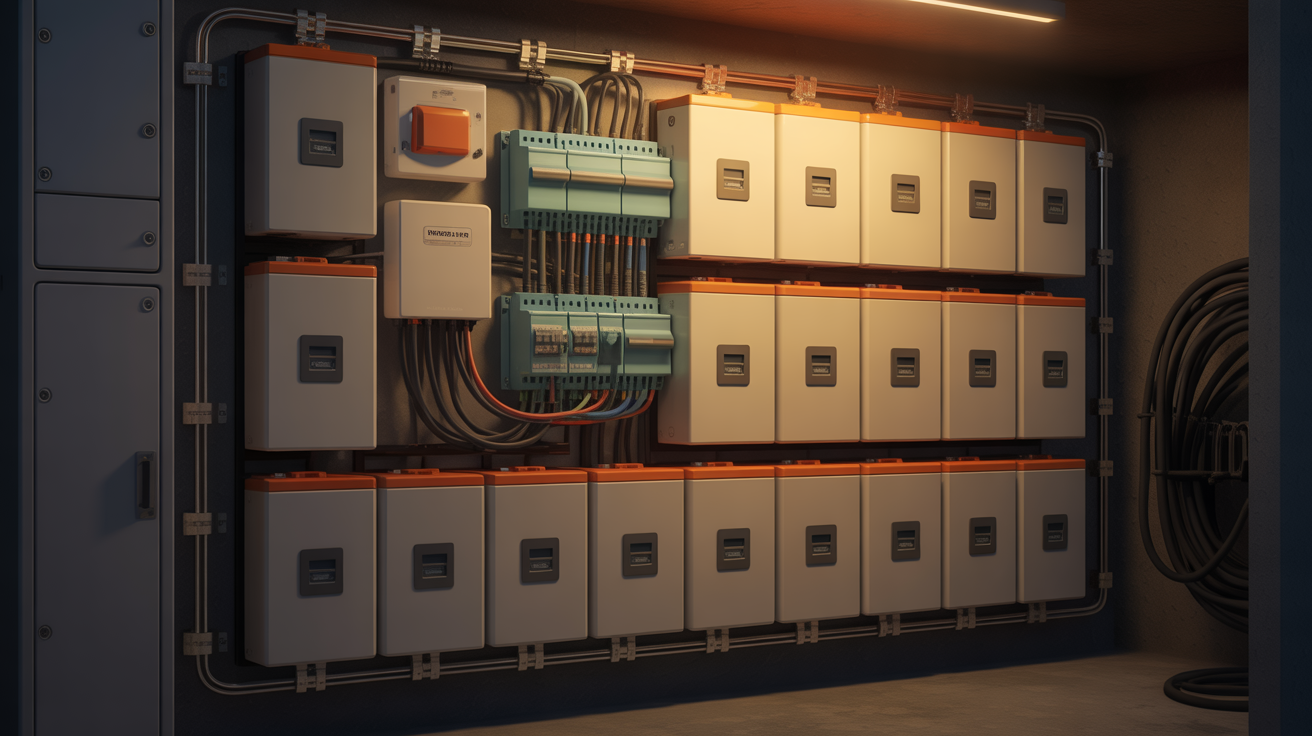
A standalone backup system pairs three components: a battery bank, a grid-tied inverter/charger (sometimes called a hybrid inverter), and an automatic transfer switch. During normal operation, the inverter charges the battery from the grid — ideally during off-peak hours if the utility offers a TOU rate. When the grid drops, the transfer switch isolates the home from the grid (anti-islanding) and the inverter feeds the home from the battery.
For sizing, the relevant questions are:
- How long do outages last in your area?
- Which loads are critical?
- What's your continuous and peak power draw on those loads?
What Is Home Battery Backup Without Solar?
A home battery backup without solar is exactly what it sounds like: a rechargeable energy storage system that lives in your home and stores electricity from the grid (or other sources like generators or even your EV) instead of relying on solar panels. Think of it as a massive power bank for your house.
These systems work by pulling energy from your utility company during normal conditions, ideally during off-peak hours when electricity rates are cheapest, and storing it in high-capacity battery units. When the grid goes down or electricity prices spike, the battery automatically kicks in, supplying your home with clean, stored power. No rooftop panels required.
Most modern standalone battery systems use advanced lithium-based chemistries (particularly LiFePO4, which we'll jump into later) and integrate directly with your home's electrical panel. They're designed to seamlessly switch over during an outage in milliseconds, so you won't even notice the transition. Your lights stay on, your medical devices keep humming, and your food stays cold.
The beauty of going solar-free is flexibility. Maybe your roof is heavily shaded, faces the wrong direction, or you're renting and can't install permanent panels. Perhaps you're just not ready to commit to a full solar investment yet. A standalone battery gives you immediate backup power and energy management benefits today, with the option to add solar panels down the road if circumstances change.
Why Invest in a Standalone Battery Backup System?
If you're on the fence about whether a grid-charged battery system makes sense for your situation, let's break down the two biggest advantages: emergency resilience and financial savings.
Protection During Grid Outages and Emergencies
The most obvious, and often most compelling, reason to invest in a home battery backup is peace of mind during outages. We're not talking about minor inconveniences anymore: grid instability has become a real concern across the U.S. Severe weather events, aging infrastructure, and increased demand mean blackouts are happening more frequently and lasting longer.
A standalone battery system provides automatic, instantaneous backup when the grid fails. Modern units switch over in under 30 milliseconds, which is fast enough that your Wi-Fi router won't even reboot. You can power essential circuits like refrigerators, lighting, communication devices, heating or cooling systems, and critical medical equipment without the noise, fumes, or maintenance headaches of a traditional gas generator.
For families with medical needs, like oxygen concentrators, CPAP machines, or refrigerated medications, this reliability isn't just convenient, it's potentially life-saving. And unlike generators that need regular fuel runs and can fail to start in cold weather, batteries are silent, emissions-free, and ready 24/7.
Energy Cost Savings Through Time-of-Use Optimization
Here's where things get financially interesting. Many utility companies now use time-of-use (TOU) rate structures, charging significantly more for electricity during peak demand hours (typically late afternoon and early evening) and less during off-peak times (overnight and early morning).
A smart battery system can be programmed to charge itself from the grid when rates are low and discharge that stored energy during expensive peak periods. This strategy, called load shifting or peak shaving, can slice a meaningful chunk off your monthly electric bill, even without generating your own power.
Let's say your utility charges $0.12/kWh off-peak and $0.35/kWh during peak hours. By storing 10 kWh overnight and using it during the evening peak instead of pulling from the grid, you could save roughly $2.30 per day, about $70 per month or $840 annually. Over the 10+ year lifespan of a quality battery system, those savings add up.
Of course, actual savings depend on your local rate structure, energy usage patterns, and battery capacity. But for homeowners in markets with significant TOU spreads (California, parts of Texas, the Northeast), the economics can be surprisingly attractive, even before factoring in the value of backup power during emergencies.
How Grid-Charged Battery Systems Work
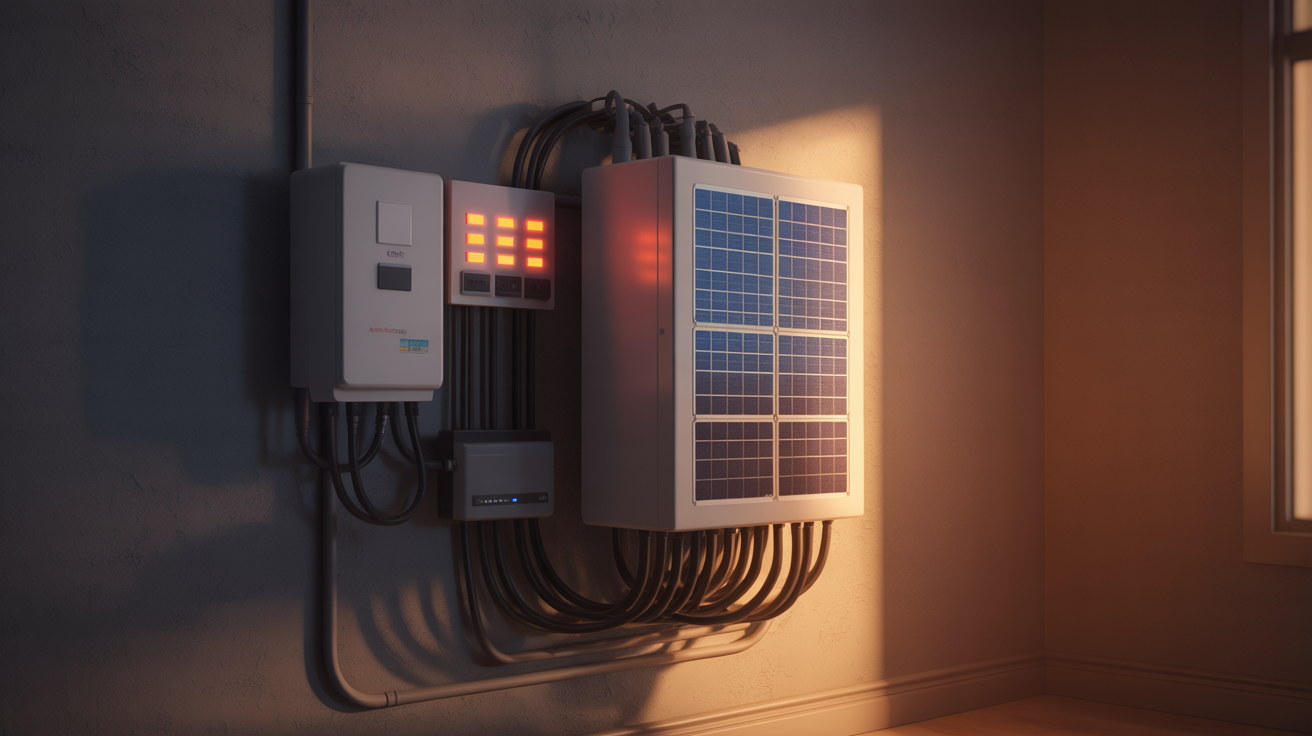
Understanding the mechanics helps demystify the technology. At its core, a grid-charged battery system consists of three main components: the battery pack itself (where energy is stored), an inverter (which converts stored DC power to usable AC power for your home), and a smart controller or energy management system (the brains that decides when to charge, discharge, and switch to backup mode).
Installation typically involves connecting the battery system to your main electrical panel or a critical loads sub-panel. When grid power is available, the controller monitors electricity prices (if you have TOU rates) or simply charges during preset off-peak windows. The batteries fill up with grid electricity, ready for deployment.
During an outage, the system detects the loss of grid voltage within milliseconds and automatically disconnects from the utility (a safety feature called anti-islanding) while simultaneously switching your home to battery power. This transition is so fast you won't notice it, clocks stay set, computers keep running.
One often-overlooked advantage is charging flexibility. While the grid is the primary source, many modern systems can also accept charge from generators, allowing you to extend runtime during prolonged outages. Some cutting-edge setups even support vehicle-to-load (V2L) charging from compatible EVs like the Ford F-150 Lightning, giving you yet another backup charging option without solar panels.
Pros of grid-charged systems:
- Quiet, emissions-free backup power
- No solar installation needed (perfect for shaded roofs, HOA restrictions, or renters)
- Future solar compatibility, add panels later if desired
- Lower upfront cost than solar-plus-battery combos
Cons to consider:
- Grid-dependent charging (can't recharge during extended outages without generator or EV)
- Finite capacity, once depleted, you're offline until power returns or you have an alternate charging source
- Smaller long-term savings compared to solar-plus-storage setups
- You're still paying the utility for every kWh you store (though at cheaper off-peak rates)
For many homeowners, the pros outweigh the cons, especially if solar isn't feasible right now but energy resilience is a priority.
Sizing a Standalone System: Real Numbers
Here's the framework we use with customers:
- Make a critical-loads list. Refrigerator (~150W avg, 800W startup), well pump (~1,500W run, 4,500W startup), freezer (~100W avg), 4 LED light circuits (~200W), router/modem (~30W), one 120V outlet for phones/laptops (~200W). Total: ~2,200W average, 6,000W peak.
- Pick a target runtime. Most U.S. outages are under 4 hours. PSPS (public safety power shutoff) events in California can run 1–3 days. Hurricane and ice-storm zones see 5–10-day events. Pick the runtime that matches your worst-case.
- Calculate kWh. Runtime hours × average load = total kWh. Then add a 20% margin for cycling losses and degraded capacity.
- Pick the inverter. Continuous rating must exceed your continuous load. Surge rating must exceed your highest peak load (well pump start, AC compressor start). 6 kW continuous / 12 kW surge is a typical residential sizing.
For the loads above, a 3-day outage target lands at: 2.2 kW × 24 h × 3 days × 1.2 margin = 190 kWh. That's a serious bank — 8 of our largest residential modules. For most customers, a 1-day target (~25 kWh) is the practical sweet spot, with a generator or fuel-based backup as a fallback for multi-day events.
Why This Install Type Is Where Wide Temp Earns Its Keep
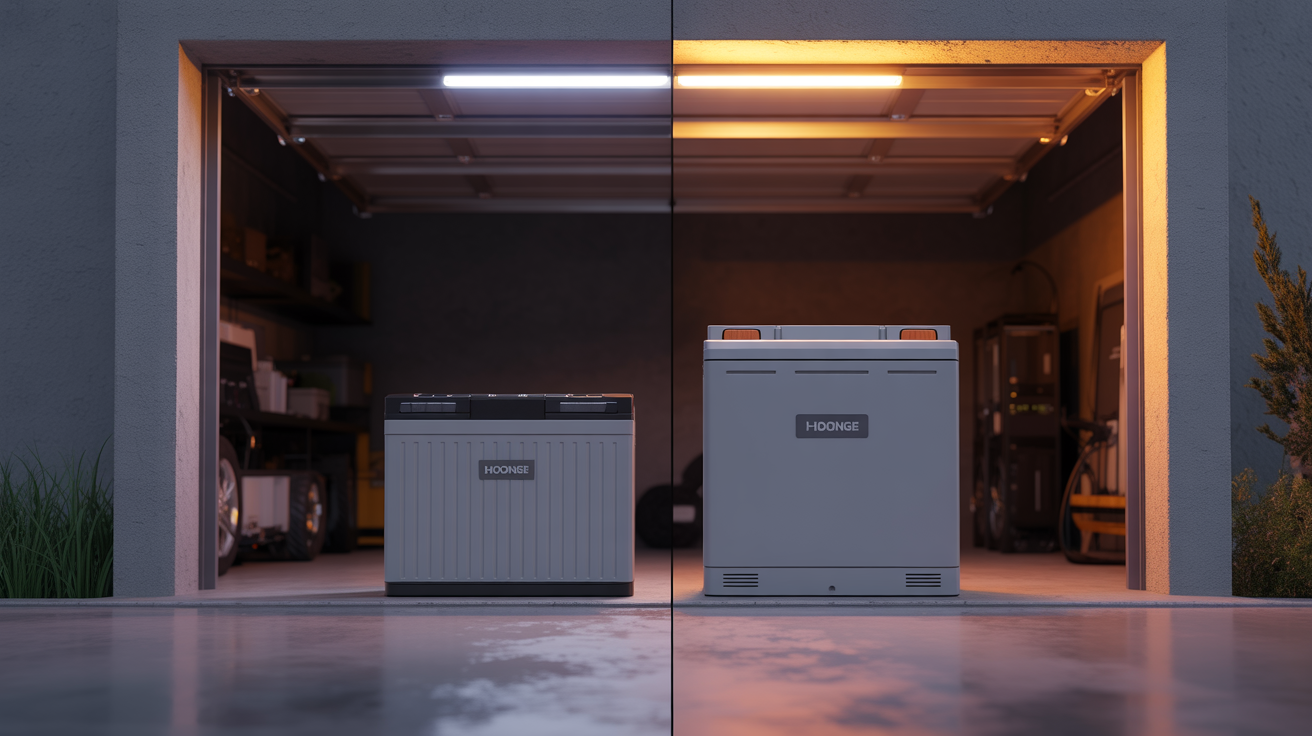
Standalone backup batteries usually live in the garage or in an exterior weatherproof cabinet. Neither is climate-controlled. A garage in Buffalo sees 10°F to 95°F over the course of a year. A wall-mount cabinet in Phoenix sees 30°F to 130°F. Standard residential batteries are spec'd for a tighter range and either won't charge or will derate during the seasonal extremes — which are the seasons grid outages are most likely.
Wide Temp's −40°F to 140°F operating range covers the worst case for both. Cold-snap charging works because of the integrated low-temperature charging system. Heat-wave operation works because the cell chemistry is tuned for sustained 60°C operation.
When a Generator Beats a Battery
If your worst-case outage is multi-day (5+ days), the kWh requirement to cover it with battery alone gets impractical fast. A 200 kWh bank costs more than $50,000 installed and takes up serious wall space. For multi-day outages, a propane or natural gas standby generator paired with a smaller battery (for the first 24–48 hours and to handle generator startup transitions) is usually the better economics. We'll tell you that on the sales call.
Choosing the Right Battery Technology for Your Home
Not all batteries are created equal. When shopping for a standalone backup system, the chemistry inside those sleek battery cabinets matters more than you might think. Let's focus on the two most relevant options for home energy storage.
LiFePO4 vs. Other Battery Chemistries
LiFePO4 (Lithium Iron Phosphate) has emerged as the gold standard for home battery backup systems, and for good reason. This chemistry offers an exceptional balance of safety, longevity, and performance that makes it ideal for residential applications.
Safety is perhaps the biggest differentiator. LiFePO4 batteries have an extremely stable chemical structure that resists thermal runaway, the chain reaction that causes battery fires. Even under abuse conditions like overcharging, puncture, or high temperatures, LiFePO4 cells are far less likely to catch fire or explode compared to other lithium chemistries. For a device that's going to sit in your garage or basement for a decade, that peace of mind is invaluable.
Longevity is another standout feature. Quality LiFePO4 systems typically offer 5,000 to 10,000+ charge cycles before capacity degrades to 80%, translating to well over a decade of daily use. Many manufacturers back this up with warranties of 5 years or longer. Companies like Humless have built their reputation on LiFePO4 technology precisely because of this proven reliability, some systems in the field have been performing flawlessly since 2010.
LiFePO4 also handles deep discharge cycles exceptionally well, meaning you can regularly use 80-90% of the battery's capacity without significantly degrading its lifespan. This gives you more usable energy and better economics over time.
Real-world examples include popular models like the Anker SOLIX F3800 and F2600, which use LiFePO4 chemistry and boast switchover times under 30 milliseconds. Humless BESS systems similarly leverage LiFePO4 to deliver UL-certified, whole-home backup solutions that integrate seamlessly with grid, generator, or future solar sources.
Other lithium chemistries, particularly Li-ion NMC (Nickel Manganese Cobalt), offer higher energy density, meaning more power in a smaller, lighter package. This makes NMC great for EVs and portable electronics where weight matters. But, NMC batteries are more temperature-sensitive, have shorter cycle lives, and carry higher fire risk, making them less ideal for stationary whole-home applications where safety and longevity trump compactness.
For homeowners investing in standalone battery backup, LiFePO4 is the clear winner. It delivers the resilience, safety, and long-term value you need when energy independence is the goal, whether you're pairing it with solar down the road or keeping it grid-charged indefinitely.
Frequently Asked Questions About Home Battery Backup Without Solar
What is home battery backup without solar, and how does it work?
Home battery backup without solar is a rechargeable energy storage system that stores electricity from the grid (or generators/EVs) for use during outages or peak pricing. It connects to your electrical panel, charges during off-peak hours, and automatically switches to battery power in milliseconds during grid failures—no solar panels required.
Can I save money with a home battery backup system without solar panels?
Yes, through time-of-use optimization. Many utilities charge less during off-peak hours and more during peak periods. By charging your battery when rates are low and discharging during expensive peaks, you can save $70+ monthly. Savings depend on your local rate structure and usage patterns.
Why is LiFePO4 the best battery chemistry for home backup systems?
LiFePO4 (Lithium Iron Phosphate) is the gold standard for home backup because it offers exceptional safety with low fire risk, longevity of 5,000-10,000+ charge cycles (10+ years), and handles deep discharge cycles well. It's safer and more reliable than other lithium chemistries like NMC for whole-home applications.
What happens to my battery during a prolonged power outage without solar?
Once your battery depletes, you're offline until grid power returns. However, many modern systems can recharge from generators or vehicle-to-load (V2L) compatible EVs to extend runtime. This is the main limitation of grid-charged-only systems compared to solar-plus-battery setups.
Can I add solar panels to my battery backup system later?
Yes, that's a key advantage of standalone battery systems. You can install them now for backup resilience and cost savings, then add solar panels down the road if your situation changes. This flexibility makes grid-charged batteries ideal if solar isn't feasible today.
How fast does a battery backup system switch to power during an outage?
Modern systems like the Anker SOLIX F3800 and Humless BESS switch in under 30 milliseconds—so fast your Wi-Fi router won't reboot, clocks stay set, and computers keep running seamlessly during the transition.
Reviewed By
Sizing methodology authored and reviewed by Wide Temp engineering. Critical-load wattage estimates reflect actual measured draws across our installer network in Buffalo, Sacramento, Phoenix, and Houston metro areas.
If you have a critical-loads list and an outage-length target, we can spec the system in 15 minutes. Request a sizing review.
Reviewed by Intelligent Power Engineering Team
This article was written and fact-checked by our in-house battery engineering team with 50+ years of combined experience in LiFePO4 technology and wide temperature battery systems.
Meet our team →